Thursday, January 28, 2016

Unit 5 Reflection

Unit 5 Reflection:
This unit covered the digestive system, the endocrine system (as shown in the video, and the lymphatic system (as shown in the picture). As I have learned in the Digestive System Lab, our digestive system is INCREDIBLY long, almost 6 times my original height. Our endocrine system is useful for secreting and manufacturing hormones throughout the body. The lymphatic system is used to store and transport T cells and B cells, which are useful to fight infections. This unit was a lot easier for me to comprehend in some ways because I have learned about immunity and the lymphatic system in AP biology last semester. This unit was harder for me because I had trouble keeping track of all of the different hormones and their functions. We did a digestive system lab and we measured the length of our digestive tract. This helped to put into perspective how flexible our intestines are and how much they fold to fit into our bodies. I would like to learn more about why rates of metabolism change and why so many more people may be genetically disposed to having diabetes. 

My New Year's goals were to 
  1. I will start running to exercise more and strengthen the exercise pillar of health.
  2. I will eat healthier by eating more fruits and vegetables on a regular basis.
I have not started running continuously yet because I had a foot injury, but I have started dance practice for Bombay in the Bay, which is making me exercise. I have started eating healthier on a regular basis and I plan to start trying to eat at least 5 fruits everyday. 


Wednesday, January 6, 2016

The Digestive System Lab: How Long is YOUR Digestive System?


  1.  For this lab, we measured the length of our mouth, esophagus, stomach, small intestine, and large intestine to determine the length of our digestive systems. I knew beforehand that our digestive systems were a LOT longer than our full-body height, but I wasn't aware that it was almost 6 times my height. 
  2. My entire digestive system was about 9.338 meters long and was approximately 6 times my height. It is able to fit inside of my abdomen because of the many folds and loops it has.
  3. I think it takes about 5 hours to have all of your food move through the entire digestive tract. According to Google, it takes 6-8 hours for all of the food to pass through your system. It depends on what kind of food you eat, the amount of fiber in it, etc.
  4. Digestion is the mechanical and chemical breaking down of food while absorption is where the nutrients are transferred to the bloodstream. Absorption occurs in the small intestine and large intestine while the digestion occurs in the mouth, esophagus, and stomach. 
  5. I want to learn about diabetes and how it can lead to other illnesses, why people have different metabolism rates and how this affects obesity, and why obesity is so prevalent in the United States.

Monday, January 4, 2016

New Year's Resolution Goals


GOALS:
  1. I will start running to exercise more and strengthen the exercise pillar of health.
    1. I will buy more comfortable running shoes
  2. I will eat healthier by eating more fruits and vegetables on a regular basis. 
    1. I will create a balanced diet which includes at least 3 fruits everyday to begin with. 

Wednesday, December 2, 2015

Monday Wellness Reflection: Meditation


Initially, my partner, Kailas, and I had planned to do our Monday Wellness presentation on running as it is something that we can both relate to. We had to decide between doing running, meditation, and yoga, but we decided to go with running as it seemed like more people would relate with it. After hearing another group was doing running, we decided to switch to meditation as it was something that we could both relate more to. I have an interest in meditation because my grandfather always used to teach me different meditation techniques. We would always practice pranayama, especially nadi shodhana pranayama. When I was younger, these breathing exercises wouldn't mean much to me, but as I grew older, I would catch myself unintentionally practicing these breathing exercises when I felt stressed. We wanted to share with the class this technique of relaxation that could come in handy in stressful environments like Saratoga High School. Before preparing for this presentation, I only knew that meditation had positive effects on our bodies and reduced stress levels. I didn't know what effects it had on our bodies specifically in relation to specific bodily systems. While we were creating this presentation, I learned specifically how meditation can improve the nervous system and the immune system. It increases connections in the brain as well as stopping the decline of CD4 T-cells (which is what occurs in HIV). The thing that I found coolest was that even though many say that there is no cure for HIV/AIDS, mindfulness meditation can be seen as something that slows down the progression of this terrible disease that affects millions worldwide. Our topic relates to health and wellness because meditation has many important effects on our everyday lives. Not only does it reduce stress and cortisol levels in our brains, but it also increases connections between different parts of the brain. Meditation also changes density of grey matter in our brain: decreasing the amount of it in our amygdala (the region which controls fear, negative emotions, and sadness), and increasing in areas that correlate with learning and memory. Meditation also increases the number of antibodies in our body. Antibodies are essential to our health as they help us fight pathogens which enter our body. Meditation not only helps the different systems in our bodies, but it also helps our overall physical well-being. Meditation stimulates our parasympathetic nervous system, which helps our body return to a calm and normal state after a certain stressor has passed. Meditation can also clear your mind so you can sleep better and it slows your respiration for longer and deeper breaths. It also improves your athletic abilities. On a scale of 1-10, I would give myself a 9 because I put in a lot of effort to make this project work. Kailas and I both worked equally on the slides, and we both did as much research as we could on the topic. Overall, I believe that our project turned out extremely well, and although we could have made it longer, I believe that we have covered all of the necessary information to teach the class about the benefits of meditation.

Hypertension Lab Relate and Review

1. What factors are known to cause increases in blood pressure?
Age, lack of exercise, smoking and drinking habits increases blood pressure.
2. Use your knowledge about the heart and the circulatory system to make a
hypothesis about how the average blood pressure for a group of people would
be affected by manipulating the age and gender of the group members.
As age increases, blood pressure would increase as well. Males also seem to have higher blood pressure than females.
3. What sorts of problems might a person develop who has chronic
hypertension?
Having chronic hypertension,  can lead to heart attack, stroke, or kidney failure.
4. Analyze the result of your experiment. Explain any patterns you observed.
5. Did the result of your experiment support your hypothesis? Why or why not?
Based on your experiment what conclusion can you draw about the
relationship of age and gender to group blood pressure averages?
6. During the course of your experiment, did you obtain any blood pressure
reading that were outside of the normal range for the group being tested?
What did you notice on the medical charts for these individuals that might
explain their high reading?
7. List risk factors associated with the hypertension. Based on your observation,
which risk factor do you think is most closely associated with hypertension?
8. What effect might obesity have on blood pressure? Does obesity alone cause a
person to be at risk for high blood pressure? What other factors, in
combination with obesity, might increase a person's risk for high blood
pressure?

Thursday, November 12, 2015

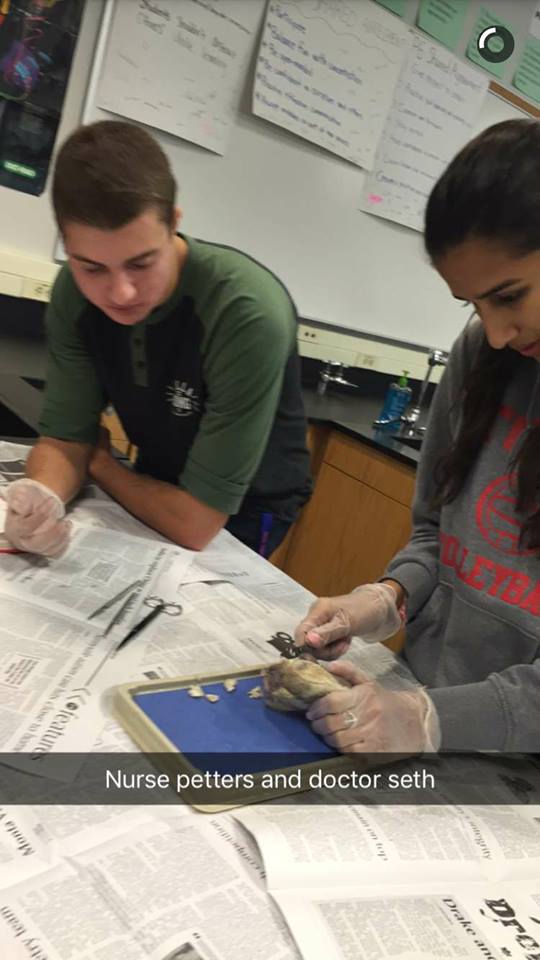
Sheep Heart Dissection Lab Questions


  1. What is the purpose of the pericardium?
    It is the thin layer of skin which encloses the heart. It protects the heart.
  2. How do arteries differ from veins in their structure?
    Arteries have thicker walls than veins.
  3. What function do you think the auricle serves?
    They increase blood capacity and volume of the blood in the atrium.
  4. What differences do you observe between atria and ventricles?
    Ventricles have thicker walls and take up a larger space in the heart than the atria.
  5. Why is the “anchoring” of the heart valves by the chordae tendineae and the papillary muscle important to heart function?
    It makes sure there is no inversion of blood and prolapse of these valves on systole.
  6. Using pictures describe what you see (chordae tendineae and papillary muscle)
  7. What is the function of the semilunar valve?
    It stops any arterial blood from re-entering the heart.
  8. a)If the valve disease occurs on the right side of the heart, it results in swelling in the feet and ankles. Why might this happen?
    The ventricles are not strong enough to pump blood back against gravity from your feet to the rest of your body.
    b) If the valve disease occurs on the left side of the heart, what complications would you expect to see?
    Not enough blood being pumped throughout the rest of the body.
  9. Using pictures describe what you see.
  10. Describe how the left and right sides of the heart differ from each other.
    The right side of the heart is deoxygenated blood while the left side has oxygenated blood.
  11. Draw and label all structure visible in the interior of the cross-section.

Unit 3 Reflection

This unit was about the cardiovascular and respiratory systems. The cardiovascular system works to pump blood and nutrients throughout our body. The blood's main organs and accessory organs include the heart, the lungs, the kidneys, the small intestine, and the large intestine. The heart is the main organ which pumps blood through the rest of the body through the use of vessels (veins, arteries, and capillaries). Cardiovascular health is avoiding heart attacks, strokes, or other heart diseases. Heart disease and stroke can be caused by high blood pressure, high cholesterol, smoking, unhealthy diet, alcohol consumption, diabetes, obesity, lack of exercise, stress, or genetic history, among other factors. Heart disease and stroke can be prevented by controlling blood pressure, controlling cholesterol, stopping smoking (or not smoking in the first place), eating a healthy diet, moderating alcohol consumption, controlling diabetes, controlling weight, exercising, and managing stress. I would like to learn more about strokes as my grandaunt just experienced one this weekend. I would like to know how to take care of those who go through this experience and I would like to learn of more warning signs for it. I think my strengths were understanding the functions of different parts of the circulatory and respiratory systems. One of my weaknesses was not being able to remember the different veins and arteries which entered and exited the heart. I'm slightly following my Unit 2 health goals as I'm eating better but I'm not following my goals as I'm not sleeping as much as I should. For the remainder of the semester, I wish to do better on tests, and I wish that I get more sleep.
Pictures from sheep heart dissection: